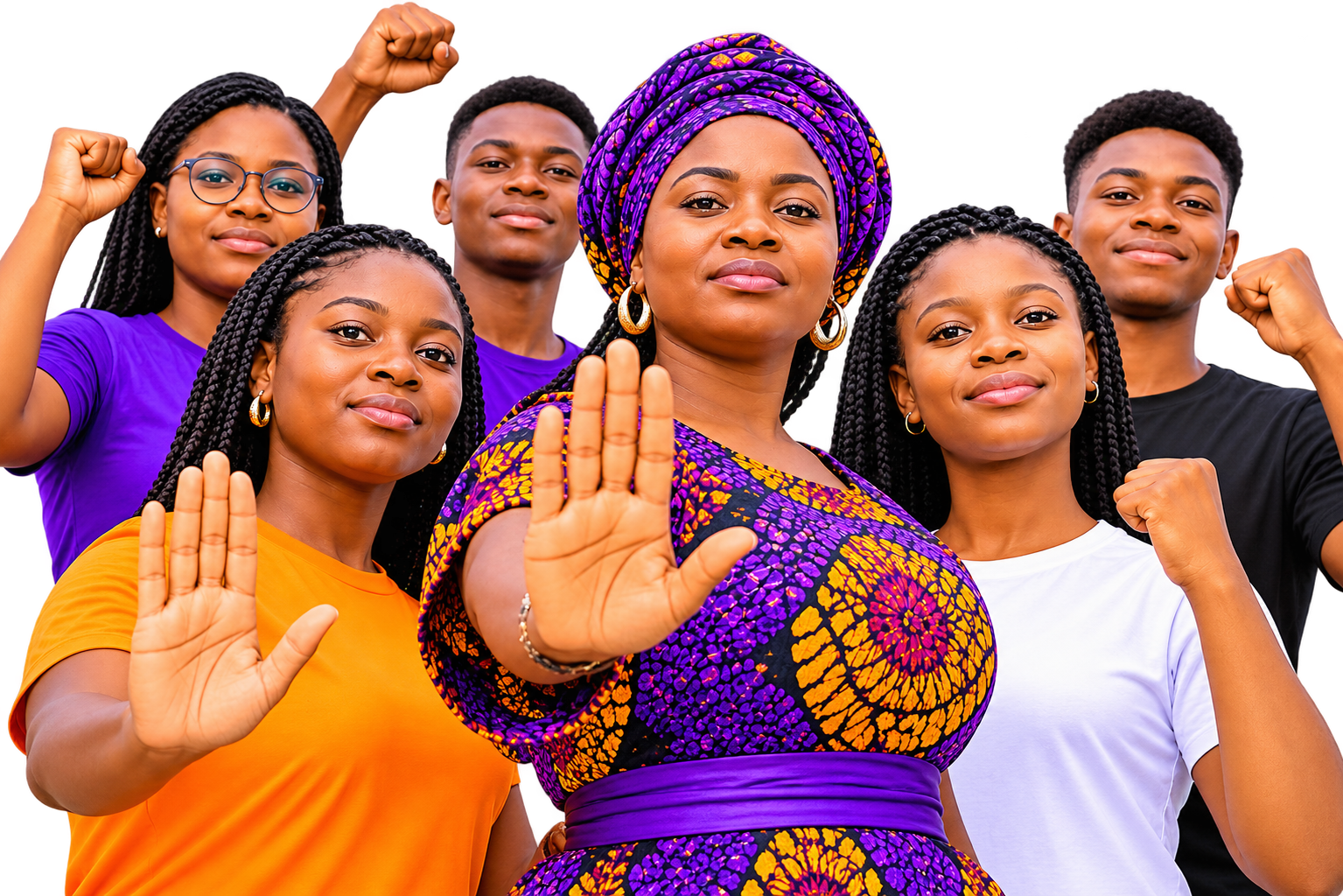
Theme: UNiTE to End Violence Against Women and Girls: Ensure Justice, Protect Survivors, End Impunity
FOR IMMEDIATE RELEASE
ACCRA, GHANA | 25 NOVEMBER 2026
As the world marks the beginning of the 16 Days of Activism Against Gender-Based Violence, the Foundation for Security and Development in Africa (FOSDA) calls for urgent and sustained action to ensure justice for survivors, strengthen protection systems and end the culture of impunity that allows violence against women and girls to persist.
Protection is a fundamental pillar of the Women, Peace and Security (WPS) agenda and Ghana’s National Action Plan on Women, Peace and Security (GHANAP). It affirms the right of women and girls to live free from violence and places an obligation on states and institutions to prevent abuse, protect survivors, ensure access to justice and hold perpetrators accountable. However, protection must go beyond commitments on paper. It must translate into accessible services, responsive institutions and justice for survivors.
FOSDA’s final evaluative monitoring of GHANAP 2 recognises progress in Ghana’s protection architecture, including the DOVVSU One-Stop Centre, the 24-hour Orange Support Centre, market response centres and 18 Child-Friendly Gender-Based Violence Courts. However, significant gaps remain. Access to shelters and psychosocial support services is still limited in many districts, particularly outside Greater Accra, leaving women and girls facing geographical, financial and social barriers when seeking protection and support.
The evaluation also highlights persistent delays in the justice system. Between 2020 and 2025, 2,172 defilement cases were filed before the courts. Of these, 1,286 were concluded, while 886 remained pending. The average time taken to conclude a case was 329.1 days. Of the concluded cases, 610 resulted in convictions, while 676 were struck out, withdrawn or discharged.
These findings point to the considerable gap between reporting sexual violence and obtaining a judicial outcome. Case backlogs, prolonged adjournments and challenges in securing evidence and witnesses can undermine timely justice, prolong survivors’ distress and expose them to further harm.
Accountability is also weakened by the absence of a comprehensive national database on sexual and gender-based violence. Without consistent data tracking cases from reporting through investigation, prosecution and judicial outcomes, it remains difficult to assess institutional responses and measure progress towards justice.
Protection, justice and accountability are inseparable. Where complaints are suppressed, survivors intimidated, perpetrators shielded by institutional influence or cases left unresolved, impunity is reinforced. This responsibility extends beyond schools to homes, workplaces, public spaces and digital platforms, where women and girls continue to experience sexual and gender-based violence.
FOSDA therefore calls on the Government of Ghana, relevant state institutions and all stakeholders to:
Expand survivor-centred services: Extend shelters, psychosocial support, medical care and legal assistance across all regions, removing geographical and financial barriers to accessing protection.
Improve access to timely justice: Strengthen investigative and prosecutorial capacity, address case backlogs and unnecessary delays, and ensure survivors are treated with dignity throughout judicial proceedings.
Enforce institutional accountability and safeguarding: Hold perpetrators and persons who suppress complaints, obstruct investigations, intimidate survivors or conceal abuse accountable through due process. Schools, workplaces and other institutions must establish accessible, confidential reporting and referral systems. Administrative action must never substitute for criminal accountability.
Centre survivors and strengthen support systems: Challenge victim-blaming, stigma and discrimination; protect survivors and witnesses from intimidation and retaliation; and adequately fund specialised services, including DOVVSU, shelters, legal aid and psychosocial care.
Strengthen data and GHANAP implementation: Establish a comprehensive national database on sexual and gender-based violence, improve transparency in tracking cases and prioritise the Protection pillar through adequate domestic financing, inter-agency coordination and measurable institutional commitments.
The effectiveness of Ghana’s protection commitments must be measured not only by the laws enacted or institutions established, but by whether women and girls can actually access safety, support and justice when their rights are violated.
The recent allegations of sexual abuse involving female students of Obuasi Senior High Technical School, alongside other cases of sexual violence reported across Ghana, underscore the urgency of these demands. Such incidents require thorough investigations, survivor-centred support, appropriate accountability and stronger safeguarding systems.
Protection must be accessible. Justice must be timely. Accountability must be non-negotiable. We cannot end violence against women and girls while allowing impunity to thrive.