The growing insecurity in West Africa , especially in the Sahel is increasingly affecting the safety and livelihoods of citizens across the sub-region. Violent extremist groups operating across large parts of Burkina Faso, Mali, and Niger have expanded their attacks on civilian populations, transport routes, and economic infrastructure. These developments are no longer confined to the Sahel alone; they are now posing direct risks to neighboring coastal states, including Ghana.
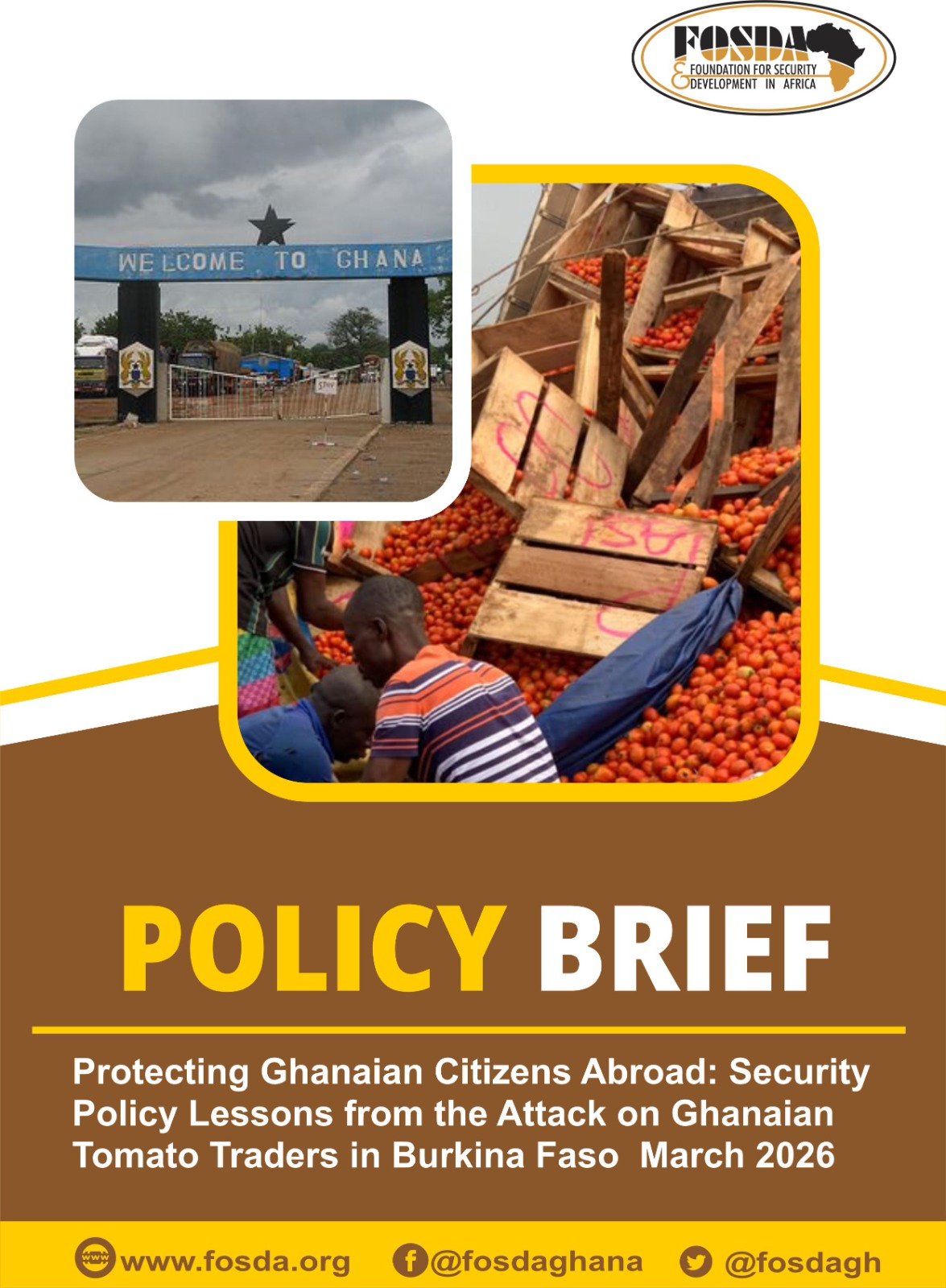
In February 2026, at least seven Ghanaian tomato traders were killed and several others injured in a terrorist attack in the northern Burkinabe town of Titao. The traders were part of a truck convoy transporting tomatoes to markets in Ghana when the attack occurred. (Reuters). The incident represents the first high-profile extremist attack specifically targeting Ghanaian nationals in the region.
For FOSDA, the tragedy highlights growing insecurity across the Sahel and its direct consequences for Ghanaian citizens engaged in cross-border trade. While the Government of Ghana responded by evacuating survivors and coordinating with authorities in Burkina Faso, the incident exposes a broader structural gap: Ghana lacks a comprehensive framework to protect citizens operating in high-risk environments outside its borders. How prepared is Ghana to protect its citizens who operate or travel in high-risk regions abroad? It is also important to note that the withdrawal of the Alliance of Sahel States (AES) from the Economic Community of West African States (ECOWAS) has significantly heighten security risks for West African citizens,
This policy brief examines the incident through a governance and security lens and argues that Ghana must adopt a proactive citizen protection framework, including structured travel advisories, improved regional security cooperation, and risk-informed trade policy.
Key recommendations include:
- Establishing a National Protection Framework for Citizens Abroad
- Issuing regular travel and security advisories for high-risk regions
- Strengthening cross-border security cooperation
- Improving support mechanisms for victims and affected families
- Integrating security risk analysis into trade and agricultural policy
Download Full Brief Here: