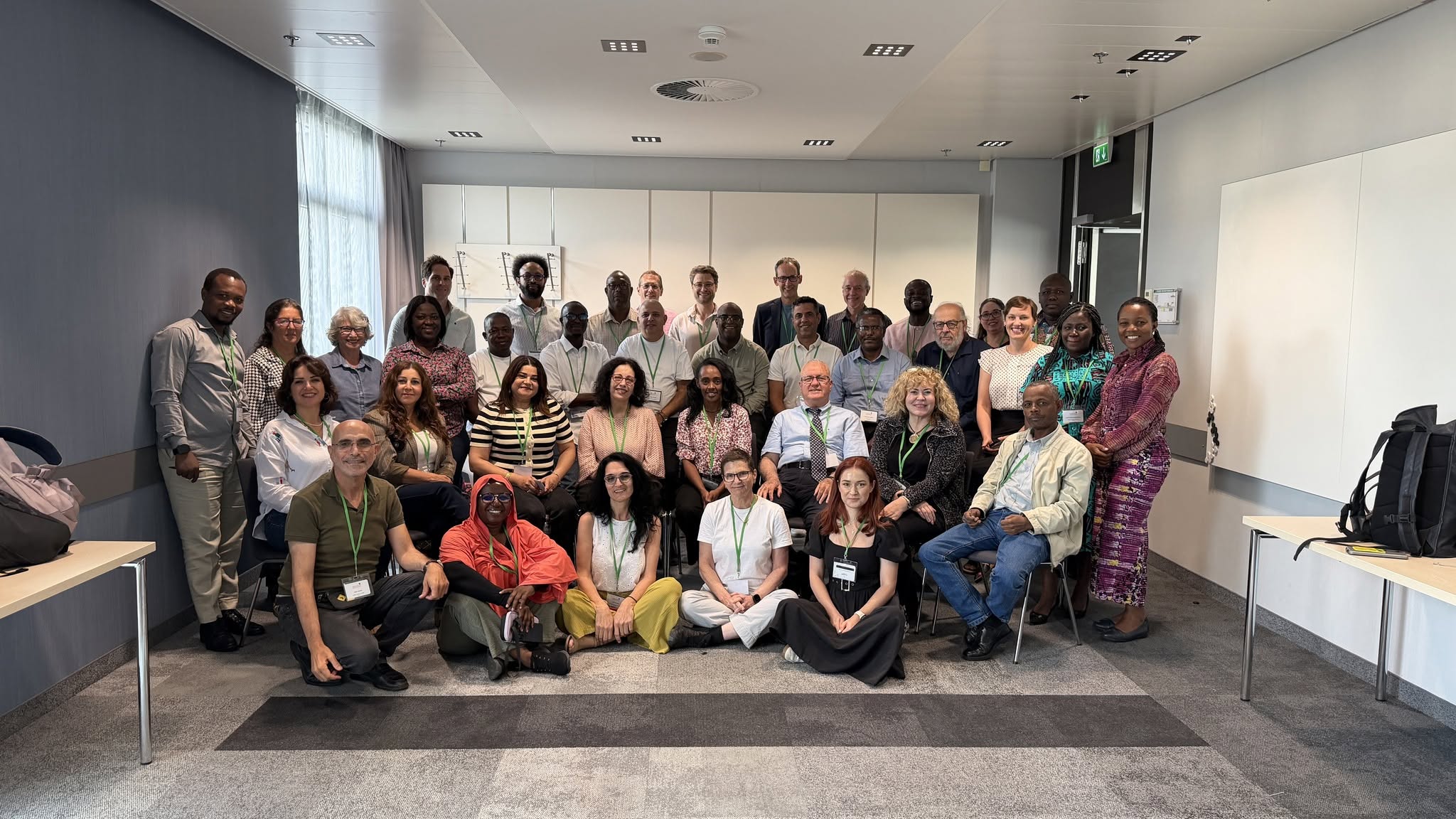
The Mandela Project is advancing its commitment to transformative learning, dialogue and conflict transformation through a three-day Training of Trainers (T.o.T) Workshop held from 1–3 September 2026 at the Private University of Education of the Diocese of Linz (PHDL) in Austria.
The workshop brought together representatives of 16 MANDELA partner institutions from Ghana, Israel, Germany, Romania, Austria and Ethiopia to deepen their practical understanding and application of the project’s four core methods: Values and Knowledge Education (VaKE), Game Changers (Negotiation), Cultural Diplomacy, and CoPoweR (Conflict Transformation).
Rather than focusing primarily on the transmission of knowledge, the training provided partners with an opportunity to experience, test and practise the MANDELA methods through hands-on and parallel workshops. Participants explored approaches that promote knowledge creation, ethical reasoning, constructive dialogue, negotiation and conflict-sensitive engagement.
The four methods offer practical approaches for creating learning environments in which participants are encouraged to think critically, engage across differences, reason ethically, negotiate constructively and develop their capacity to transform conflict.
The T.o.T therefore served not only as a capacity-building exercise but also as an important step towards institutionalising the MANDELA methods within partner organisations and educational institutions. University staff and civil society practitioners strengthened their ability to facilitate sessions using the methods and to explore ways of integrating them into teaching, training and other educational strategies.
FOSDA’s Role as a MANDELA Project Partner.
As a key project partner, the Foundation for Security and Development in Africa (FOSDA) is contributing to the implementation and localisation of the MANDELA approach in Ghana.
Following the T.o.T, FOSDA will collaborate with KATHO – Catholic University of Applied Sciences North Rhine-Westphalia in Germany to provide mentorship and technical support to facilitate the integration of the MANDELA methods within three Ghanaian universities: the University for Development Studies (UDS), University of Cape Coast (UCC), and the Catholic University of Ghana.
This partnership will support the translation of the methods from training into practice, enabling partner universities to explore how VaKE, Game Changers, Cultural Diplomacy and CoPoweR can be incorporated into their teaching, training and institutional engagement.
The initiative is particularly relevant to FOSDA’s longstanding work in peacebuilding, human security, conflict prevention and youth development, providing new tools and methodologies for strengthening constructive dialogue, critical thinking and conflict transformation among young people and other stakeholders.
FOSDA was represented at the T.o.T by Theodora Williams Anti, Executive Director, and Solomon Okai, who engaged in the practical sessions and exchanges with fellow MANDELA partners from across Africa, Europe and the Middle East.
The three-day workshop marks an important milestone in the MANDELA Project’s efforts to move from knowledge transmission to transformative learning and practice. Through continued collaboration among project partners, the initiative seeks to strengthen the capacity of educational institutions and civil society organisations to use innovative methods to promote dialogue, intercultural understanding, negotiation and peaceful approaches to conflict.
For FOSDA, the next phase will focus on ensuring that these methods are meaningfully adapted and integrated within Ghanaian higher education institutions, contributing to the broader goal of equipping young people and educators with the knowledge, values and practical skills needed to engage constructively in increasingly complex and diverse societies.