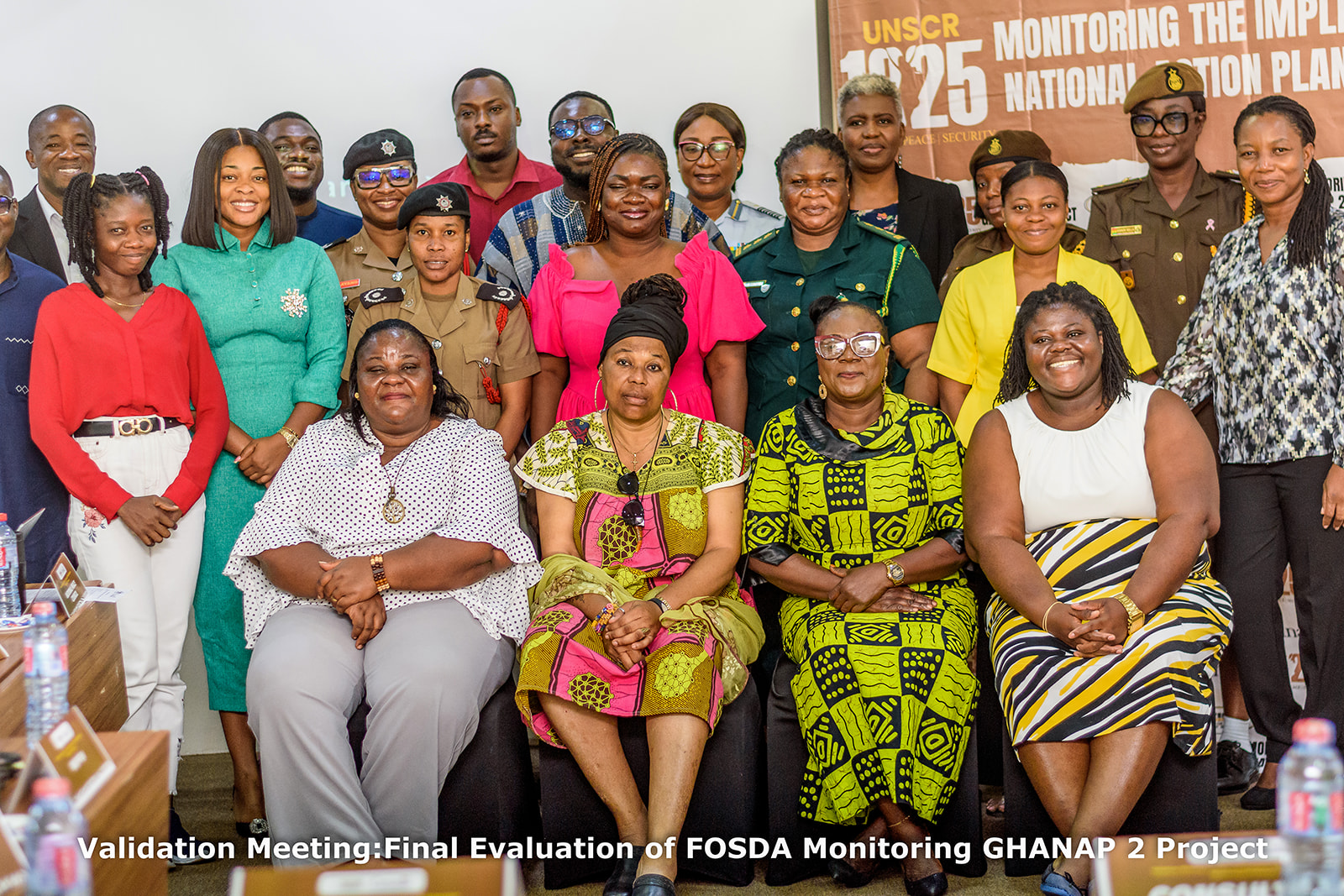
The Foundation for Security and Development in Africa (FOSDA) convened stakeholders from government institutions, security services, civil society and development partners to validate the final evaluation of its independent monitoring of Ghana’s Second National Action Plan on Women, Peace and Security (GHANAP 2).
Held at AH Hotel on 27 October 2026 in Accra, the meeting provided an opportunity to assess implementation progress, identify persistent gaps and draw lessons to inform Ghana’s next National Action Plan on Women, Peace and Security (WPS).
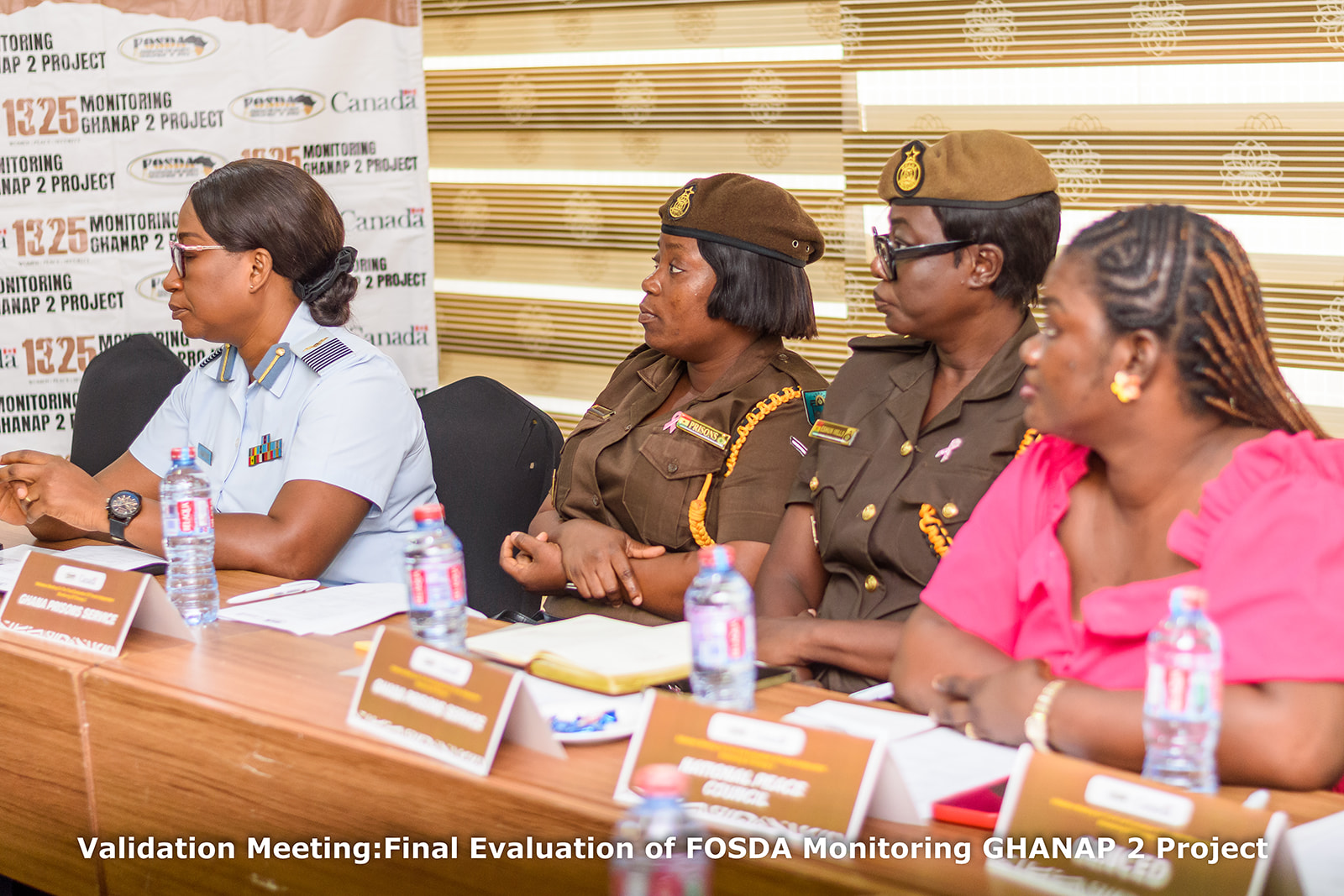
In a keynote address delivered, Ms. Dorothy Barnes, FOSDA’s WPS Project Coordinator, highlighted progress in gender mainstreaming, women’s representation and institutional policy development. She particularly commended the security institutions interviewed for the evaluation, including the Ghana Armed Forces, Ghana Immigration Service, Ghana National Fire Service and Ghana Prisons Service, for their efforts to integrate gender into institutional structures and operations.
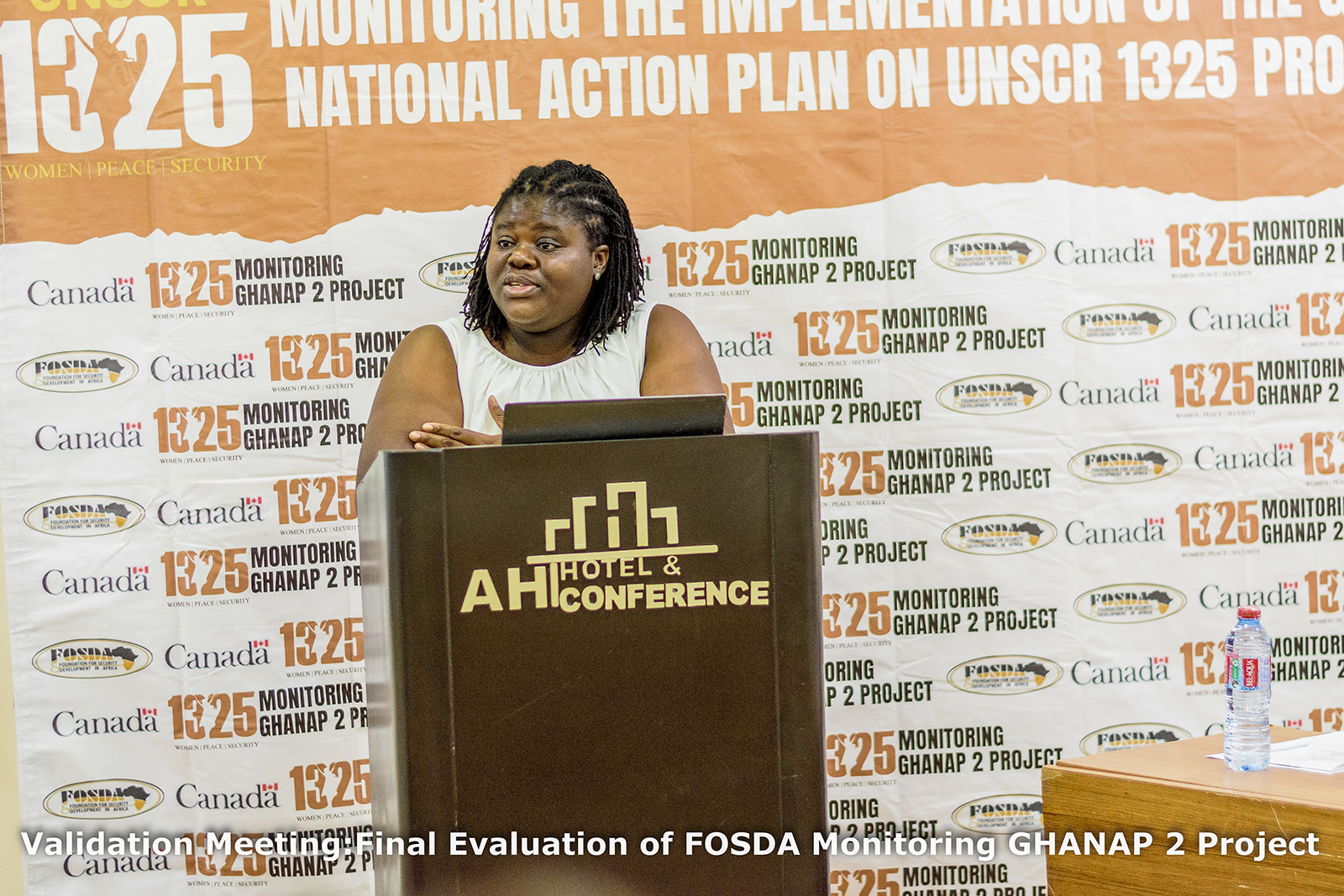
However, the evaluation identified significant implementation challenges including the absence of dedicated financing for GHANAP 2 . Of the 46 activities assessed, three were fully delivered, 24 partly delivered, 11 had limited delivery and eight were not delivered. The report also highlighted gaps in access to survivor support services and delays in the justice process.
FOSDA called for Ghana’s next National Action Plan to have a costed implementation framework, predictable domestic financing, clear institutional responsibilities and stronger monitoring and accountability mechanisms.
Speaking on behalf of the High Commission of Canada, Bertha Desmennu, Senior Program Liaison Officer, commended FOSDA for its continued leadership in advancing the WPS agenda. She reaffirmed Canada’s commitment to supporting Ghana’s WPS efforts through partnerships with civil society and national institutions, including support for gender-responsive policies and women’s meaningful participation in peacekeeping through the Elsie Initiative for Women in Peace Operations.
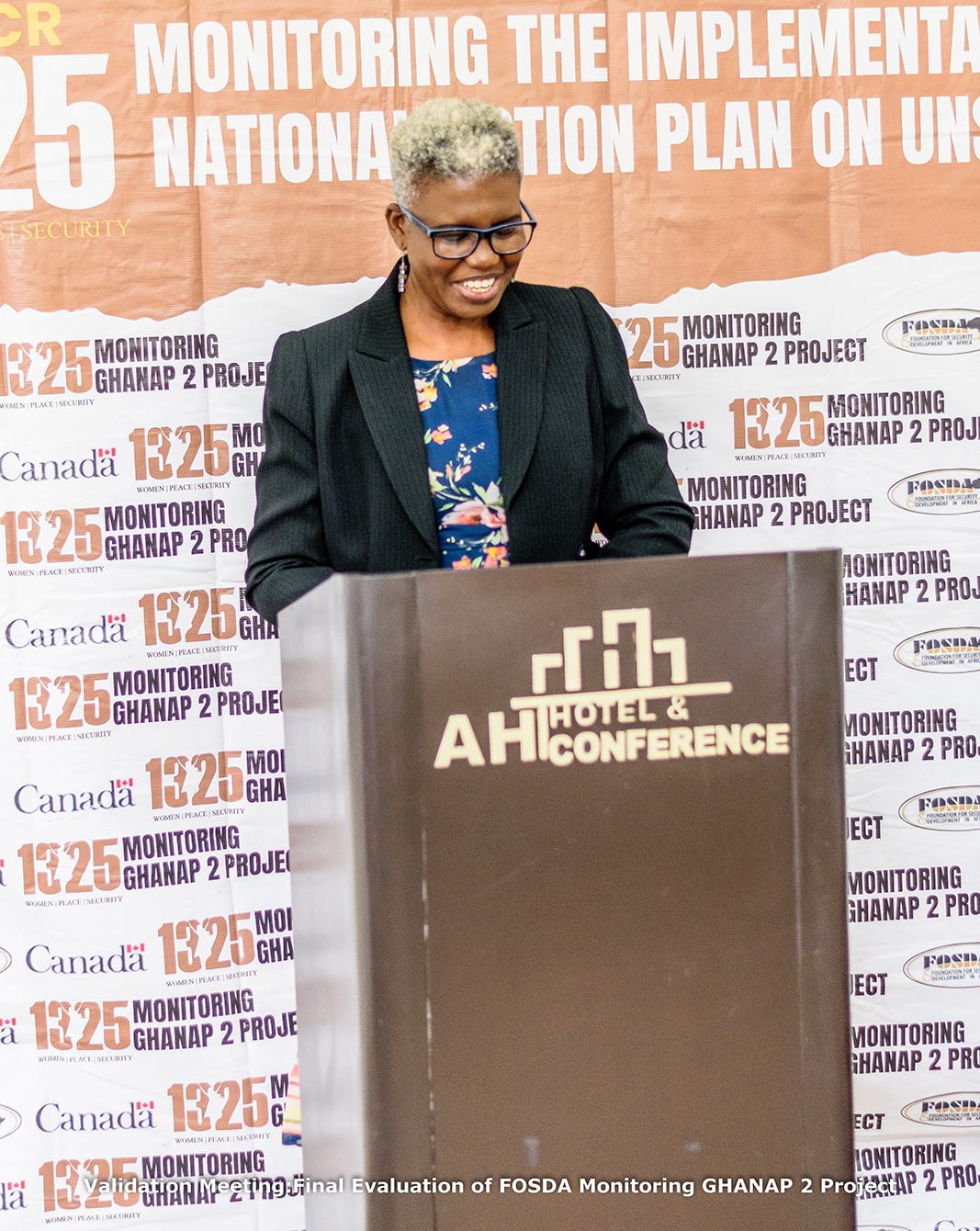
Ms. Desmennu underscored the importance of the evaluation in strengthening accountability, informing future programming and identifying approaches that can be sustained and expanded. She also highlighted the role of civil society in amplifying community perspectives and ensuring that WPS commitments translate into meaningful outcomes for women and girls.
As Ghana plans and prepares for GHANAP III, FOSDA emphasises the need to move beyond commitments towards measurable results. Priorities include strengthening domestic financing, improving sex-disaggregated data and reporting, expanding protection and prevention services, and ensuring women and communities participate meaningfully in peace and security decision-making.
The validation meeting forms part of FOSDA’s efforts, with support from Global Affairs Canada, to strengthen evidence-based monitoring and accountability for Ghana’s WPS commitments. The evaluation findings and recommendations are expected to inform a more inclusive, measurable and adequately resourced implementation of the Women, Peace and Security agenda in Ghana.
Watch Video Highlight Here:
