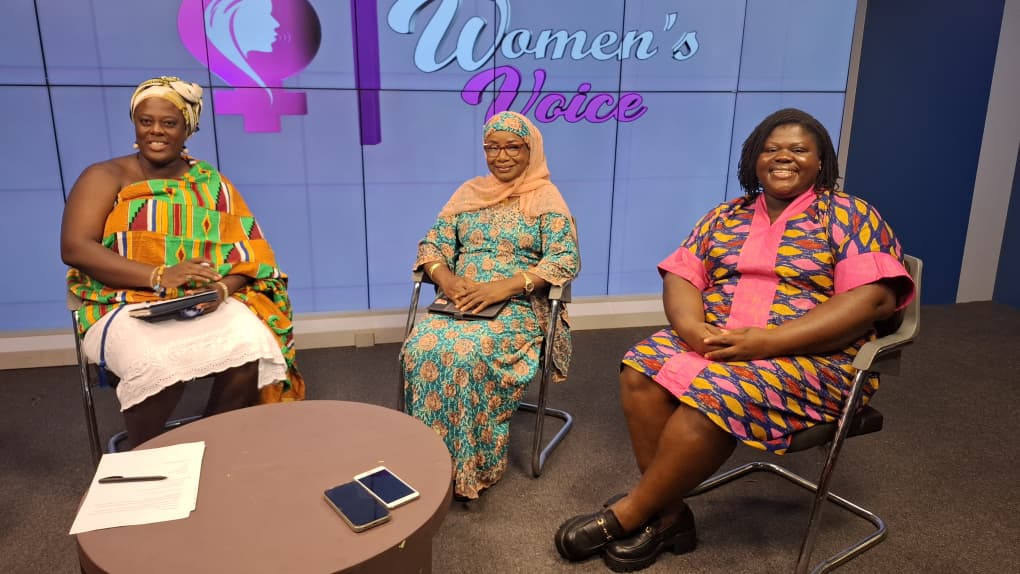
In commemoration of the International Women’s Day for Peace and Disarmament, the Foundation for Security and Development in Africa (FOSDA) – alongside key strategic partners including the National Commission on Small Arms and Light Weapons, the FOSDA Monitoring GHANAP Coalition, the Women Mediators Network of Ghana (WOMNet), and the UNOWAS Working Group on Women, Youth, Peace, and Security –executed a high-impact media advocacy drive spanning national television and regional airwaves.
The campaign rolled out across four targeted media sessions between Thursday, 21st May and Monday, 25th May 2026. This included two regional appearances in Tamale on Zaa Radio’s Morning Hour Show and Zaa TV’s “Issues of Today” program, as well as two national broadcasts in Accra on GTV’s Breakfast Show and GTV’s “Women’s Voice” show. The coordinated drive aimed to inform and influence the public to recognize women not merely as passive onlookers, but as vital security actors who require actual fiscal backing to sustain peace.
Across these platforms, coalition representatives established a powerful baseline by highlighting women’s substantive roles in peace and disarmament. Discussions shed light on how local women – ranging from formal mediators and Queen Mothers to community peace circles – act as critical “first responders” in early warning systems and the voluntary handover of small arms during times of insecurity. To contextualize this impact, the panel featured real-world examples, such as women’s pivotal mediation roles in the Alavanyo-Nkonya dispute, demonstrating that when women are structurally supported, peace outcomes last longer.
A central focus of the drive was the current outlook of the Ghana National Action Plan on UNSCR 1325 (GHANAP 2) and the urgent need to intentionally fund it. Throughout all four appearances, FOSDA and its partners maintained a unified and uncompromising message: women are already doing extensive, invaluable work to promote peace and non-violence, but political commitments to support these efforts without real resources remain mere rhetoric. For women to effectively scale their insights into national disarmament and security strategies, Ghana’s National Action Plan on Women, Peace and Security must be robustly and structurally financed.